Kyoto is a working city of shrines, family temples and private lanes that happens to be one of the most beautiful places on Earth — and its rules, mostly unwritten, exist because fifty million annual visitors move through neighbourhoods where people actually live. Getting them right isn't hard, and locals notice when you do.
At temples and shrines
- The purification basin (temizuya): ladle water over your left hand, then right, then pour a little into your cupped left hand to rinse your mouth (never drink from the ladle), then tip the ladle upright to rinse the handle. Thirty seconds, and you've done the one ritual most visitors skip.
- At Shinto shrines: toss a coin, bow twice, clap twice, make your wish, bow once. At Buddhist temples: no clapping — hands together silently.
- Shoes off wherever there's a step up to wooden floors and a shelf of slippers. Socks matter today.
- Photography is usually fine in gardens and forbidden inside main halls — look for the small signs, and when in doubt, don't.
In Gion, the camera rule is real
The geisha district's private alleys now carry fines for photographing geiko and maiko without consent, after years of visitors physically blocking them on their way to work. The women you see hurrying at dusk in full dress are professionals heading to appointments — treat it like photographing any stranger commuting, because that's what it is. Want the photo experience? Book a proper cultural performance, or a licensed kimono-dressing session — that's what they're for.
The crowd calculus
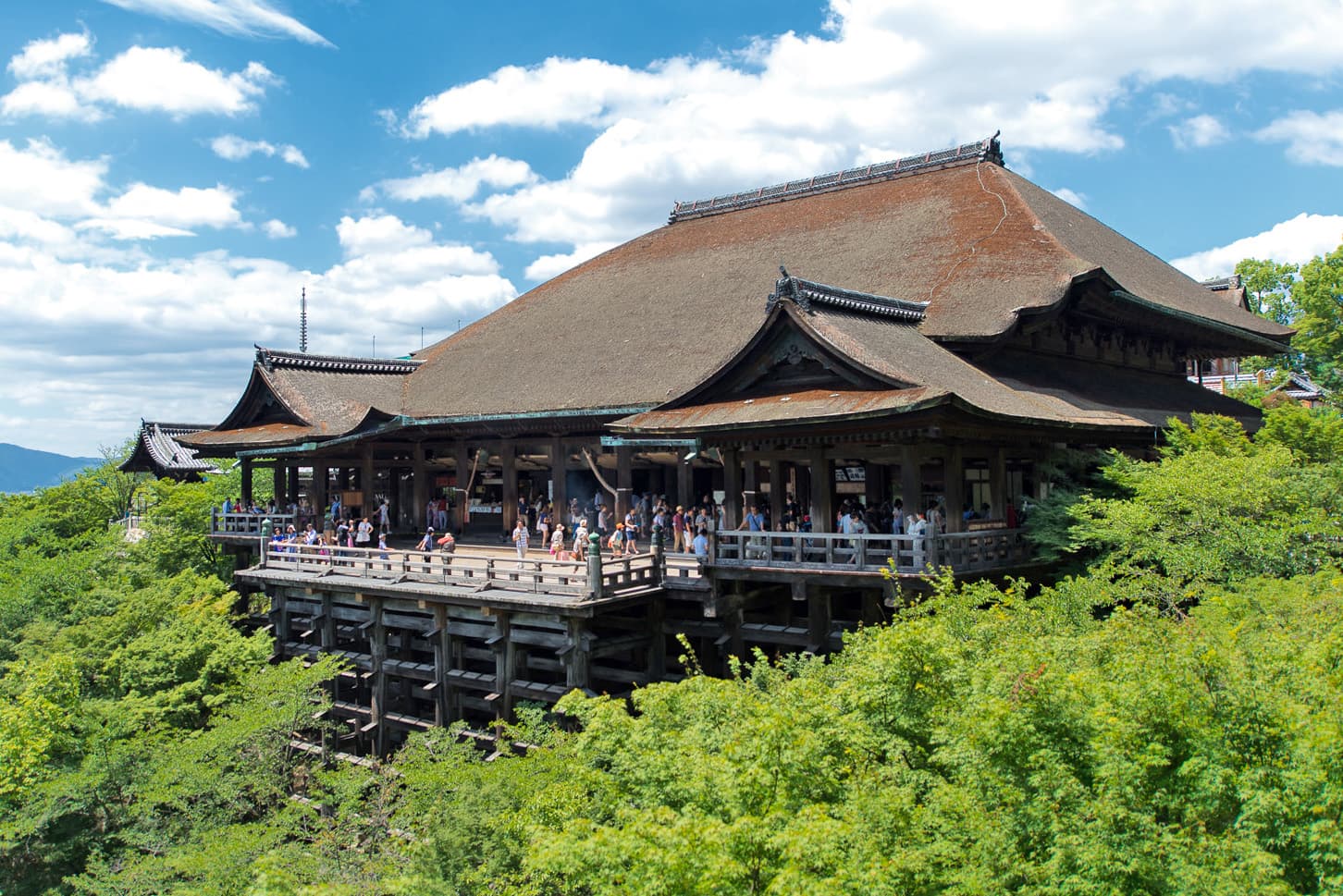
Kyoto's flagship sights — Fushimi Inari's ten thousand torii gates, the Kiyomizu-dera veranda, Arashiyama's bamboo grove — are all open-air and all transformed by timing:
- Fushimi Inari: open 24 hours. At 7am the gates tunnel uphill in silence; at noon it's a queue. The crowds thin dramatically past the halfway viewpoint — most people turn back.
- The bamboo grove: arrive before 8am or accept that you're photographing other photographers.
- Kiyomizu-dera: opens at 6am, before the tour buses reach the hill. The morning light on the veranda is the postcard.
Small things that read as respect
Don't eat while walking (stand by the stall instead); queue on the marked side of escalators; keep voices down on buses — you'll notice everyone does; carry your rubbish, because public bins barely exist and the streets are spotless anyway. None of this is scored. All of it is seen.